

Few animals have earned a reputation quite like the honey badger (Mellivora capensis). Officially recognized by Guinness World Records as the world’s most fearless animal, this small carnivore has become legendary for standing its ground against lions, leopards, hyenas, and even venomous snakes.
Standing only 25–30 cm (10–12 inches) at the shoulder and weighing between 6 and 16 kg (13–35 pounds), the honey badger is hardly an imposing giant. Yet size has never defined its survival strategy. Instead, evolution equipped it with extraordinary defenses, remarkable intelligence, and an attitude that has fascinated wildlife researchers for decades.
Where Do Honey Badgers Live?
Honey badgers inhabit much of sub-Saharan Africa, the Arabian Peninsula, Iran, Pakistan, and India. They occupy a wide range of habitats including grasslands, dry forests, scrublands, and semi-deserts.
These solitary mammals travel enormous distances while searching for food. Adult males may patrol territories exceeding 500 square kilometers (190+ square miles), although territory size varies greatly depending on food availability.
Most activity occurs after sunset, making honey badgers surprisingly difficult for scientists to observe in the wild.

Built Like a Tiny Tank
The honey badger’s greatest defense isn’t aggression—it’s anatomy.
Its skin is remarkably thick around the neck and shoulders and exceptionally loose across much of the body. If a predator grabs it, the badger can twist around inside its own skin and bite its attacker.
Combined with:
- Powerful jaws
- Sharp teeth
- Long front claws reaching nearly 4 cm (1.5 inches)
- Incredible pain tolerance
…the honey badger becomes a dangerous opponent despite its small size.
Young lions, leopards, and spotted hyenas have all been documented abandoning attacks after difficult encounters.

This post contains affiliate links. As an Amazon Associate, I earn from qualifying purchases.
Can Honey Badgers Really Survive Snake Bites?
One of the most famous honey badger myths is that they’re completely immune to snake venom.
The truth is even more fascinating.
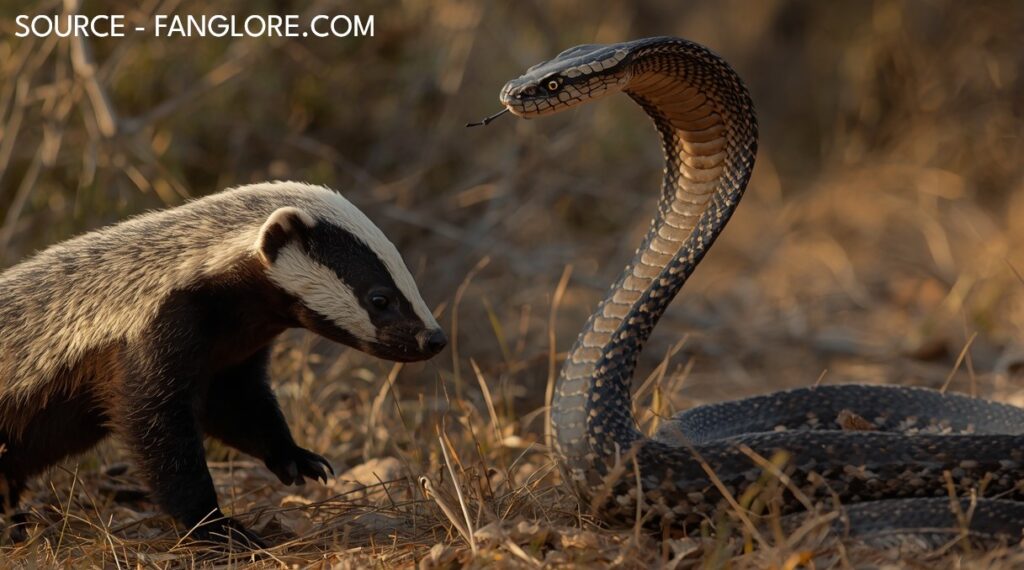
Honey badgers possess partial resistance to the neurotoxins of several venomous snakes, thanks to evolutionary adaptations affecting their nervous system receptors. This resistance helps reduce the effects of certain venoms—but it is not complete immunity.
Researchers have documented honey badgers surviving bites from highly venomous snakes, including cobras and puff adders. In some cases, the animal temporarily collapses into a coma-like state before recovering several hours later.
However, large venom doses or bites from certain snake species can still be fatal.
Even more impressively, honey badgers actively hunt venomous snakes, often using speed and precise bites to the head to reduce the risk of being bitten.
More Than Just a Honey Lover
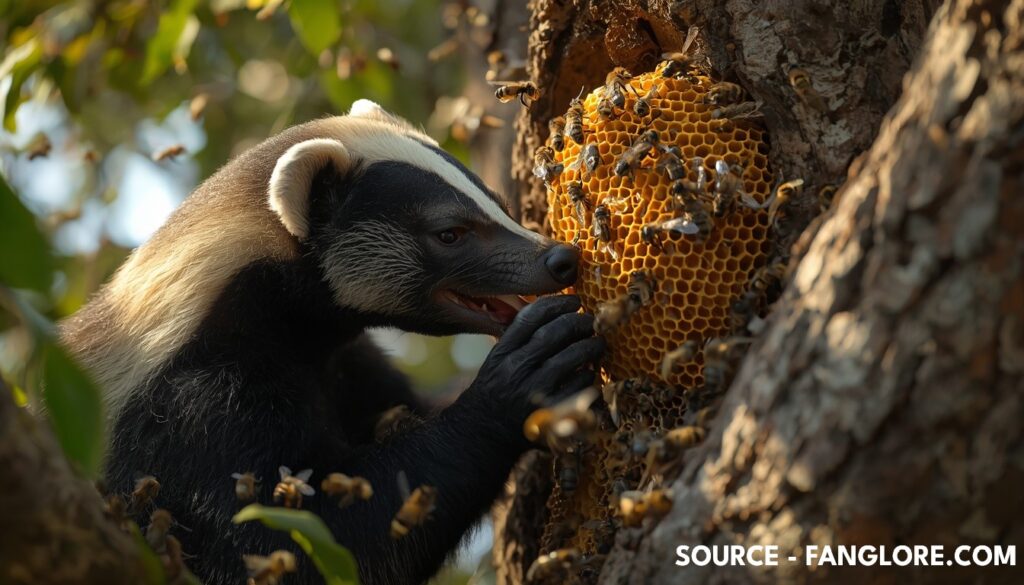
Despite their name, honey is only an occasional treat.
Honey badgers are highly opportunistic predators with an incredibly varied diet that includes:
- Rodents
- Lizards
- Venomous snakes
- Birds and eggs
- Insects
- Scorpions
- Tortoises
- Frogs
- Fruit
- Carrion
When raiding beehives, they often seek bee larvae and pupae, which are rich in protein and fat, rather than the honey itself.
Their powerful claws allow them to dig through termite mounds, tree roots, and underground burrows in minutes.
Smelly—but Surprisingly Effective
When threatened, honey badgers can release a powerful, foul-smelling secretion from specialized anal glands.
The odor is strong enough to discourage predators and may also play a role in communication between individuals.
Some researchers have suggested the secretion could help during beehive raids by confusing or discouraging bees, but this idea remains under scientific investigation.
Smarter Than They Look
Honey badgers are also surprisingly intelligent.
In captivity, they’ve been observed:
- Stacking objects to climb over walls
- Opening gates and latches
- Using logs as makeshift ladders
- Solving complex escape puzzles
Their problem-solving abilities rival those of many larger mammals and have repeatedly surprised zoo staff.

Why Are Honey Badgers So Fearless?
The famous “Honey Badger Don’t Care” viral video helped cement the species’ reputation as fearless.
But wildlife researchers paint a more nuanced picture.
Honey badgers don’t actively seek fights with lions or leopards. Whenever possible, they avoid dangerous predators using their exceptional sense of smell.
When escape isn’t possible, however, they rely on a strategy that has evolved over millions of years:
- Stand their ground.
- Make themselves appear dangerous.
- Fight with relentless determination.
For many predators, the potential injuries simply aren’t worth the meal.
Conservation Status
The honey badger is currently classified as Least Concern by the IUCN because of its wide distribution.
However, local populations continue to face threats from:
- Habitat destruction
- Road mortality
- Illegal trapping
- Conflict with beekeepers
- Poisoning
Fortunately, modern wildlife-friendly beekeeping methods—such as elevated and reinforced hives—have greatly reduced conflicts in several parts of Africa.

Final Thoughts
The honey badger’s legendary reputation isn’t built on recklessness—it’s built on evolution.
Thick skin, powerful claws, remarkable intelligence, and partial resistance to snake venom have turned this relatively small mammal into one of nature’s most resilient survivors.
It isn’t invincible, and it certainly isn’t looking for trouble. But when danger comes knocking, few animals respond with the same determination.
That’s why, decades after earning the title, the honey badger remains one of the most extraordinary animals on Earth.
Frequently Asked Questions
Why is the honey badger called the world’s most fearless animal?
Because it has been documented defending itself against much larger predators, including lions, leopards, and hyenas, earning recognition from Guinness World Records.
Are honey badgers immune to snake venom?
No. They have partial resistance to certain snake venoms, but they can still be seriously injured or killed by venomous bites.
Do honey badgers only eat honey?
No. Honey is only a small part of their diet. They primarily eat small mammals, reptiles, insects, birds, eggs, and other opportunistic prey.
Can honey badgers defeat lions?
Not usually. Their goal is survival rather than victory. Their aggressive defense often convinces predators that attacking them isn’t worth the risk.
Leave a Reply