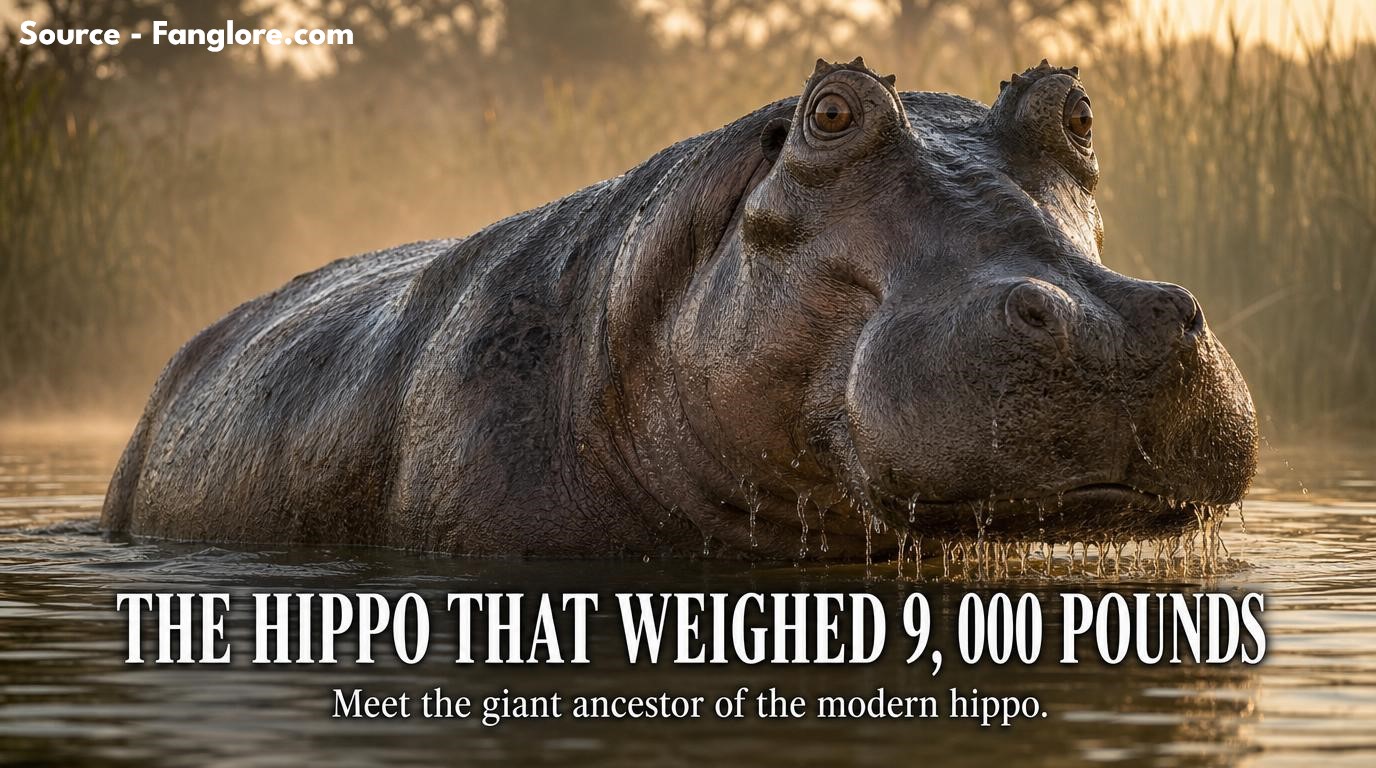
The modern hippo is already one of the most dangerous animals on the planet — a 4,000-pound tank of muscle and temper that kills more people in Africa every year than lions do. But scroll back a couple million years, and the hippo family had a member so massive it made today’s river giants look like calves.
Meet Hippopotamus gorgops — nicknamed the “Gorgon-eyed river horse” for the strange, bulging eye sockets that pushed its gaze upward and outward like something out of a myth. It was the largest hippo that ever lived, and it once ruled the rivers, lakes, and floodplains of prehistoric Africa and Europe.
This tank-like animal is closer to dinosaurs in some aspects than its modern relatives.
A Skull Built Like a Submarine Periscope
Every hippo alive today has a party trick: it can submerge almost its entire body underwater while keeping its eyes, ears, and nostrils poking above the surface. It’s the ultimate ambush stance — mostly hidden, fully alert.
The most important aspect of any animal is its ability to hide itself from prey and predators. Hippos, like their friends crocodiles, have the best place to hide in the form of water bodies.
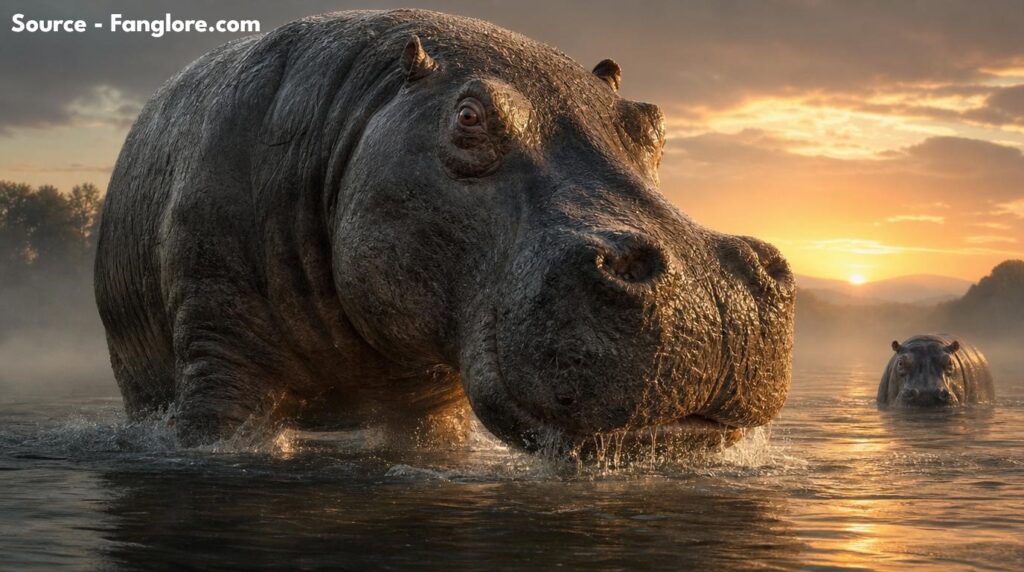
Hippopotamus gorgops took that trick to an extreme. Its eye sockets weren’t just on top of its skull — they were raised on bony mounds, almost like small turrets, giving it an even wider, higher vantage point while its enormous body stayed submerged. That skull architecture is where the “Gorgon-eyed” nickname comes from, a nod to the snake-haired monsters of Greek myth whose stare alone could turn a man to stone.

Check out Petting Zoo Hippo Stuffed Plush
This post contains affiliate links. As an Amazon Associate, I earn from qualifying purchases.
A Genuine Giant
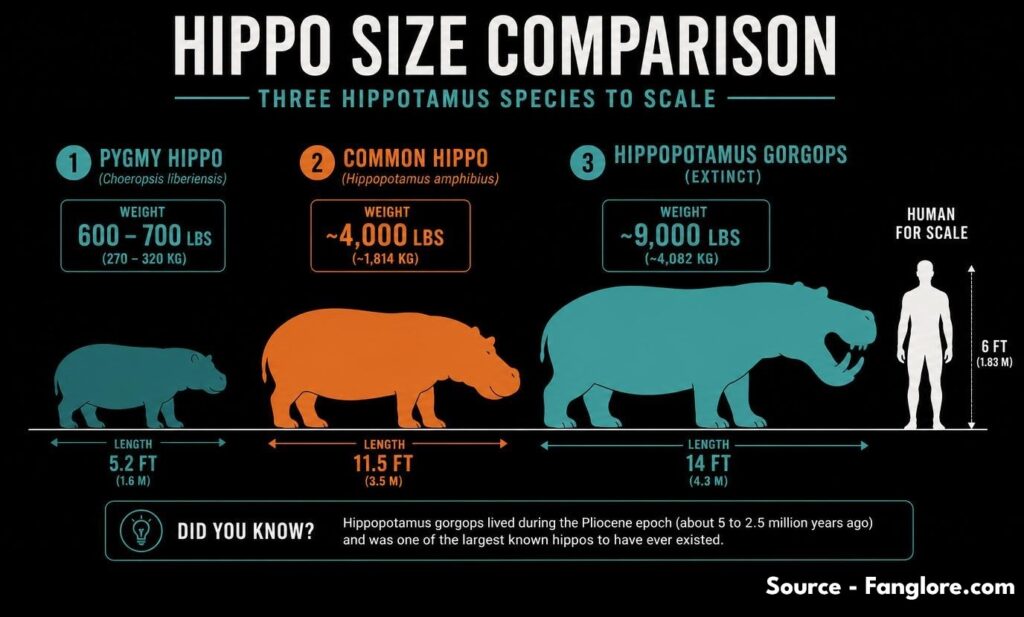
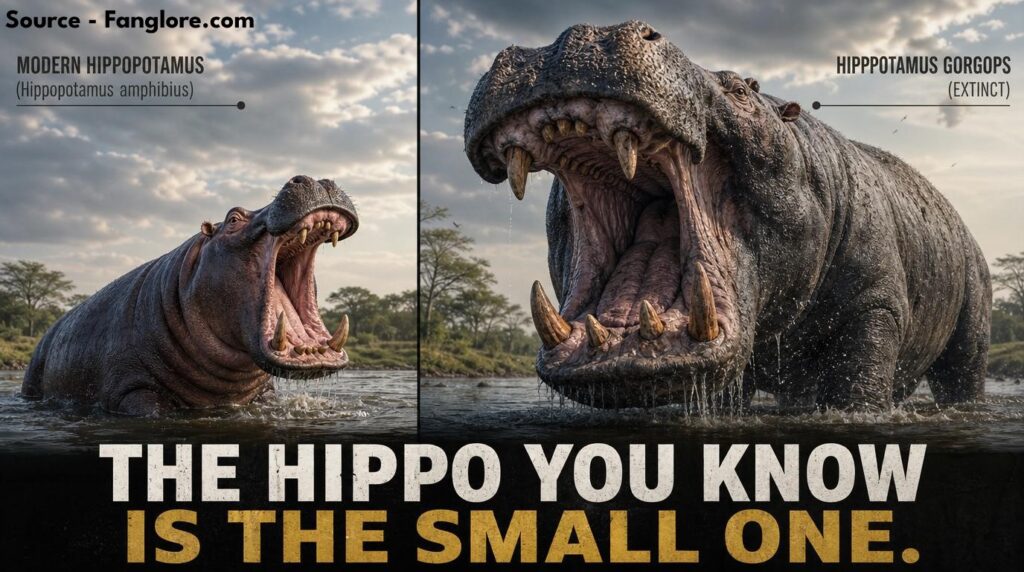
Numbers are where this animal stops sounding like a big hippo and starts sounding like a small dinosaur. Estimates put Hippopotamus gorgops at roughly 6.9 feet tall at the shoulder and up to 14 feet long, with a body weighing somewhere between 8,600 and nearly 9,900 pounds. That’s heavier than an adult African elephant bull in some cases, and nearly double the bulk of the biggest hippos alive today.
Its skull alone would have been a formidable weapon — massive jaws packed with tusk-like teeth built for both defense and dominance, capable of delivering a bite that few Pleistocene predators would have risked testing.
Just thinking about such a beast gives shivers to some animal enthusiasts.
From African Wetlands to European Rivers
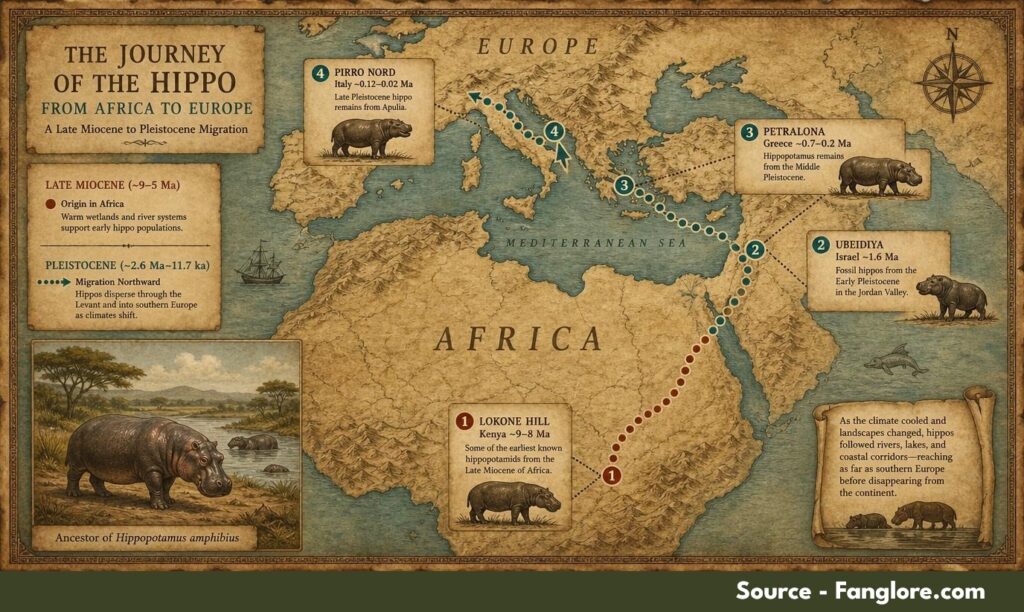
Hippopotamus gorgops first appeared in Africa during the late Miocene, in the same wetlands and river systems that its modern descendants still haunt. But as the climate shifted during the Pleistocene, this giant didn’t stay put — it pushed north into southern Europe, following rivers and lakes into completely new territory.
That migration wasn’t a dead end, either. Scientists believe it helped set the stage for other now-extinct hippo lineages, including Hippopotamus antiquus, often called the European hippopotamus, which spread even further across the continent in the giant’s wake.
Fossils of these hippos are often found near those of elephants, rhinos, and other animals that once roamed Europe.
A Monster That Outlasted the Predators, Not the Climate
Here’s the twist: this wasn’t an animal that got hunted into extinction. Hippopotamus gorgops vanished around 1.6 million years ago, during the middle Pleistocene — well before the harshest swings of the Ice Age even began. Early humans and this giant almost certainly crossed paths near the same rivers and waterholes, but given how lethal even modern hippos are, it’s unlikely our ancestors were the ones calling the shots in that relationship.
Imagine yourself being a human dwelling forest in that time and you witness this monstrousity near the river for the first time.
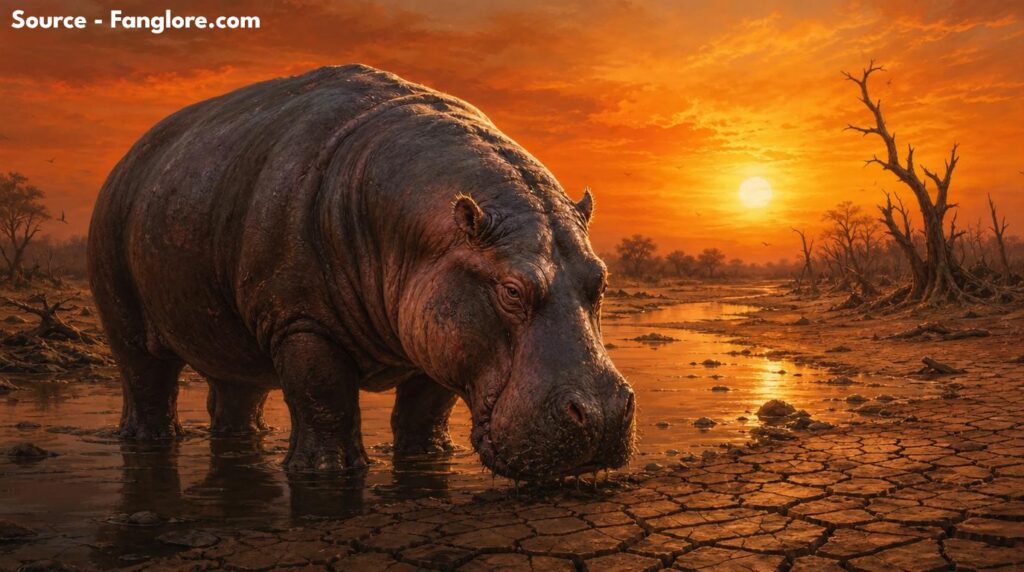
The more likely culprit is the same one that ends most megafauna dynasties: a changing climate that shrank the wetland habitats this river giant depended on to survive. As lakes and floodplains contracted, so did the world Hippopotamus gorgops was built for.
This is how a species thrives and ends, the nature and the ecosystem that nurtures them just disappears and the species just walks away from the face of the earth like it never existed.
Why It Still Matters Today
Modern hippos are already notorious — territorial, fast for their size, and responsible for an estimated 500 human deaths a year in Africa, more than lions, leopards, or elephants. Knowing that today’s hippos are the downsized version of something even larger and more heavily armed puts that reputation in a whole new light.
The Gorgon-eyed river horse is a reminder that the animal kingdom’s most feared giants weren’t always the ones we know today — and that somewhere in the fossil record, an even bigger, even more dangerous version of a familiar animal is usually waiting to be found.
All this points out to the fact that Nature’s engineering and selection of who lives and who perishes is dependent mostly on the fact of adaptability. But still, I would like to repeat that it only depends on the adaptibility most of the time, not all the time.
Leave a Reply