
Most man-eating animal legends fade once someone finally puts a name, a photograph, and a body count to the myth. Gustave did the opposite. The more people learned about him, the bigger the legend grew — and decades later, nobody has ever managed to catch him.
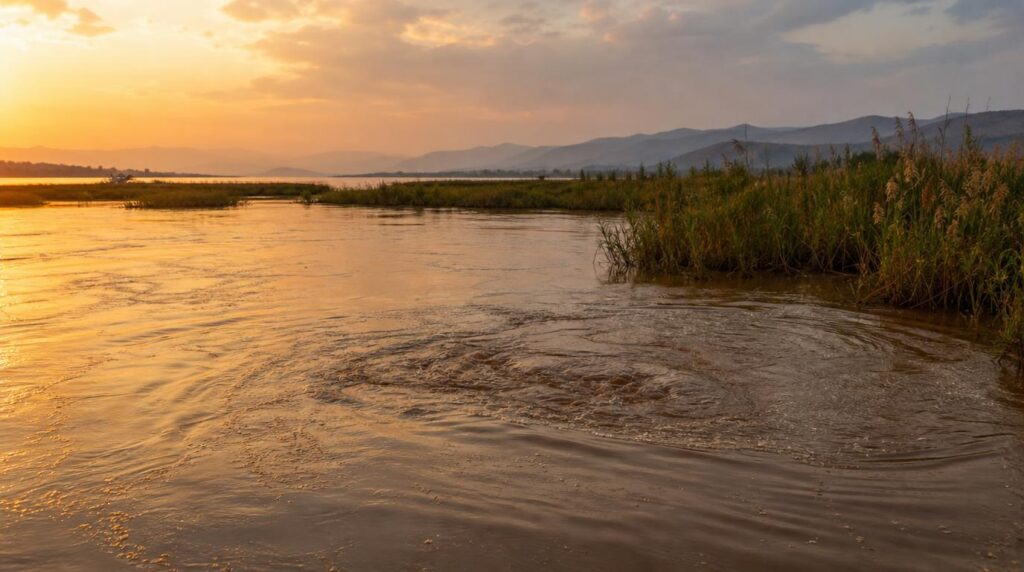
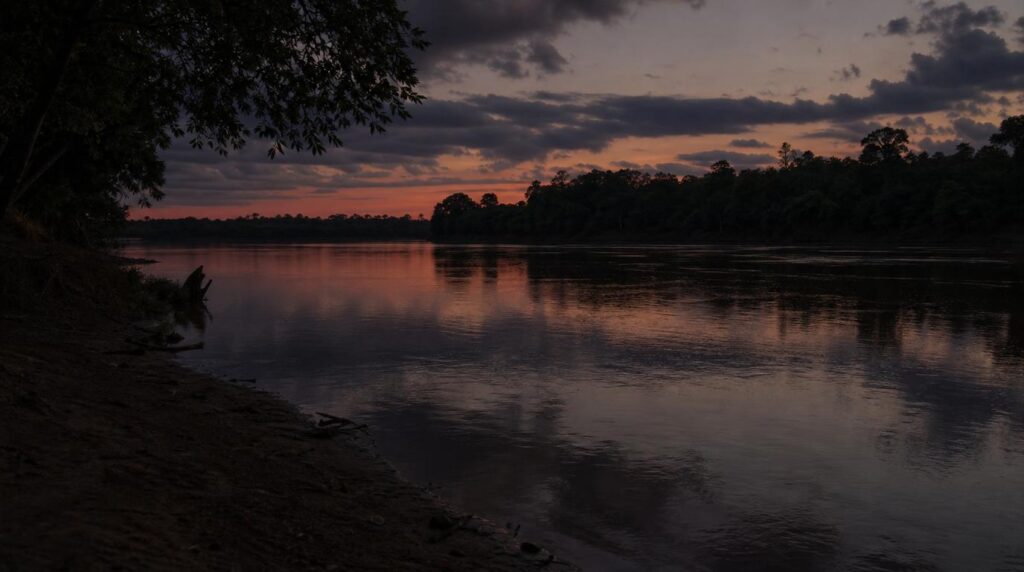
Along the Rusizi River delta and the shores of Lake Tanganyika in Burundi, locals speak of a Nile crocodile so enormous, so scarred, and so consistently linked to human deaths that he has his own name, his own reputation, and — according to some accounts — his own kill count stretching past 300.
This is the legend of Gustave the elusive crocodile of burundi.
Who Is Gustave?
Gustave is a Nile crocodile (Crocodylus niloticus) first reported by villagers around Lake Tanganyika in the late 1980s, with documented attack reports dating back to 1987. He wasn’t formally identified and named until 2001, when French herpetologist Patrice Faye began studying the crocodile after years of local reports. And with the identification, the triumph and terror of Gustave started in the place called burundi
What sets Gustave apart from an ordinary large crocodile isn’t just the size — it’s the consistency of the sightings. Eyewitnesses across decades and different villages have described the same distinguishing feature: a scar on top of his head, believed to be an old bullet wound.
A Crocodile Built Like Nothing Else in the Region
Nile crocodiles are already the largest crocodile species in Africa, but Gustave is reported to dwarf even the biggest of his own kind in the region.
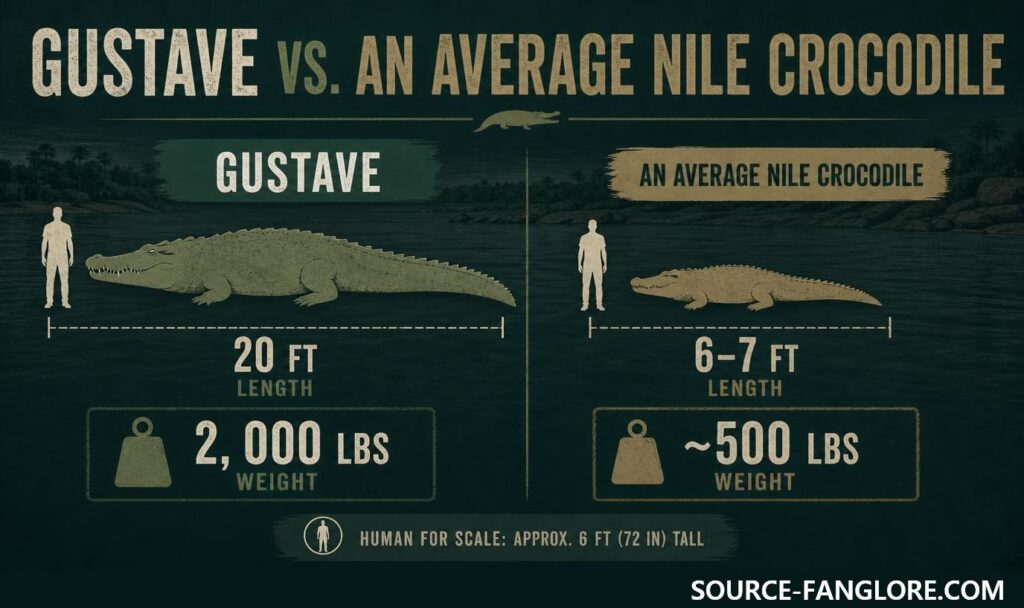
- Estimated length: Nearly 18–20 feet (5.5–6 meters)
- Estimated weight: Around 2,000 pounds (900 kg)
- Size compared to local crocodiles: Roughly three times larger than the average Nile crocodile in the same waters
- Estimated age: Long assumed to be over a century old, until researchers noted he still had a full set of teeth — an aging Nile crocodile would typically be losing them, suggesting Gustave may actually be a much younger, still-growing giant, likely in his 60s
His unusual bulk is also believed to explain his reputation. According to Faye, Gustave’s size makes him too slow and cumbersome to hunt the fish and small mammals that make up a typical crocodile’s diet — forcing him to go after larger, slower-moving prey, including wildebeest, hippos, and occasionally humans along the riverbank.
The size difference also makes him more elusive since a crocodile that large would leave at least some trails for trackers, but Gustave was not one of them.
The Bulletproof Crocodile
Perhaps the most enduring part of Gustave’s legend is the scar running along his head and shoulder — reportedly the result of soldiers opening fire on him with automatic weapons during Burundi’s decades of civil unrest.
Local lore holds that Gustave simply shrugged off the gunfire and swam away unharmed. Researchers offer a more grounded explanation: a crocodile of his size carries such dense bone plating and sheer bulk that a handful of rounds fired from a distance, in murky water, may never have reached a vital area at all. Bulletproof or simply lucky, Gustave survived — and the scar became part of his myth.
The mark of a bullet that missed, the defining factor of how he was identified among his kind.
Why He’s So Hard to Catch
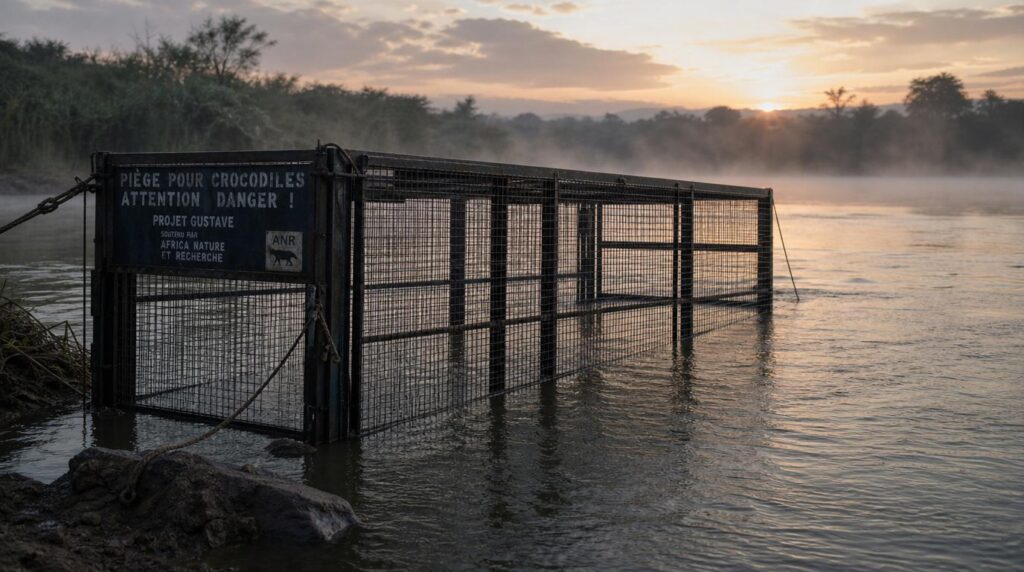
Multiple expeditions, including a formal capture attempt backed by conservationists and documented for a PBS film, have tried and failed to trap Gustave. Cages have been set. Live bait has been used. In at least one attempt, a trap holding a goat was found empty and partially submerged after a storm, with no clear answer as to whether the goat escaped or Gustave came and went unnoticed.
Part of the challenge is Gustave’s own caution. Unlike smaller, more predictable crocodiles, he is reported to roam a wide territory between the river delta and the open lake, surfacing rarely and rarely in the same place twice — behavior that has kept him one step ahead of every capture effort for more than two decades.
And he has only his intelligence to thank it, since his age does not warrant such experience.
Separating the Legend From the Evidence
Gustave’s story sits in an unusual space between documented wildlife incident and local legend, and it’s worth being upfront about that.
Crocodile researchers who have investigated the claims note real problems with the numbers: photos and footage said to show Gustave often appear to show several different large crocodiles, and some of the widely shared clips are believed to be unrelated stock footage used in earlier sensationalized reports. A regional crocodile survey in more recent years reportedly found only a couple of crocodiles in the area, both far smaller than Gustave’s legendary size. Some researchers also point out that the timeline of his most infamous attacks overlaps with Burundi’s civil war, a period when many disappearances and deaths near water sources may have been misattributed to a single animal.
None of that erases the core, well-documented facts: attacks by large Nile crocodiles along Lake Tanganyika’s shores are real and ongoing, an exceptionally large crocodile matching Gustave’s description has been repeatedly and independently sighted since the 1980s, and he was significant enough to draw formal scientific study, a National Geographic investigation, and a dedicated documentary crew. Where the story shifts from fact to folklore is in the exact body count — a number that has likely grown with every retelling, the same way most animal legends do.
As of the most recent confirmed reports, Gustave has not been sighted since around 2015, and some later accounts suggest he may have since died — though, true to form, nothing about his story has ever been definitively confirmed.
He simply ascended from stories to an immortal legend.
The Bigger Picture
Gustave’s legend endures for the same reason most animal-villain stories do: he represents something real — an apex predator operating in a landscape where humans and wildlife share the same narrow strip of water — dressed up with just enough myth to make it unforgettable.
Whether or not one crocodile is truly responsible for 300 deaths, the underlying danger is not exaggerated. Nile crocodiles are responsible for hundreds of human attacks across Africa every year, and the shores of Lake Tanganyika remain one of the more dangerous stretches of water on the continent for exactly the reasons that built Gustave’s reputation in the first place.

FAQs About Gustave the Crocodile
Is Gustave a real crocodile or a myth?
Gustave is based on a real, repeatedly sighted Nile crocodile documented since the late 1980s and formally studied by herpetologist Patrice Faye starting in 2001. The exaggerated kill-count figures, however, are considered unverified folklore rather than confirmed fact.
How big is Gustave really?
Estimates from researchers and eyewitnesses place him at roughly 18–20 feet long and around 2,000 pounds, making him one of the largest Nile crocodiles ever documented, though his exact size has never been directly measured since he’s never been captured.
Has Gustave ever been caught?
No. Multiple capture attempts, including a formally documented expedition, have failed. He was last confirmed sighted around 2015.
Why do Nile crocodiles attack humans?
Nile crocodiles are opportunistic ambush predators, and attacks typically occur when humans enter or work near the water’s edge in areas the crocodile considers its territory — a risk that increases with unusually large individuals like Gustave, who may target larger, slower prey.
Leave a Reply