
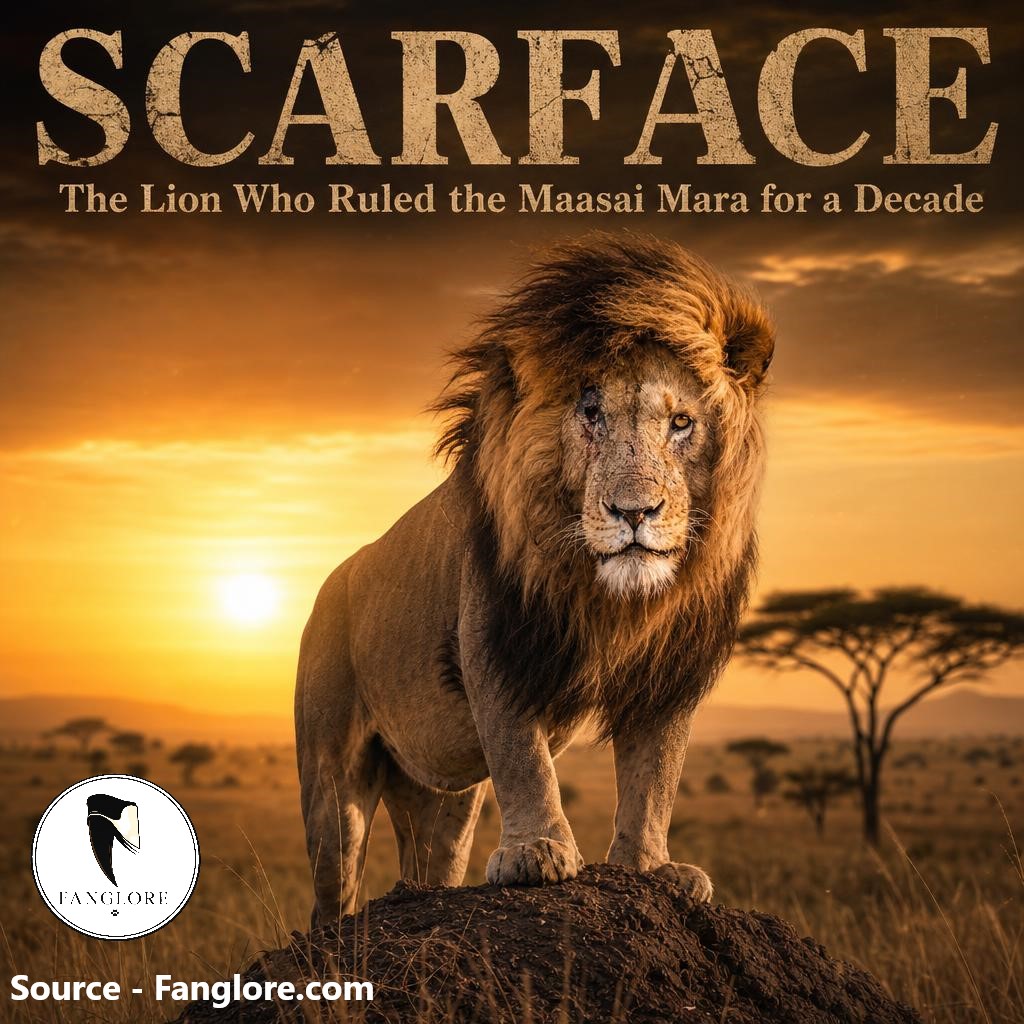
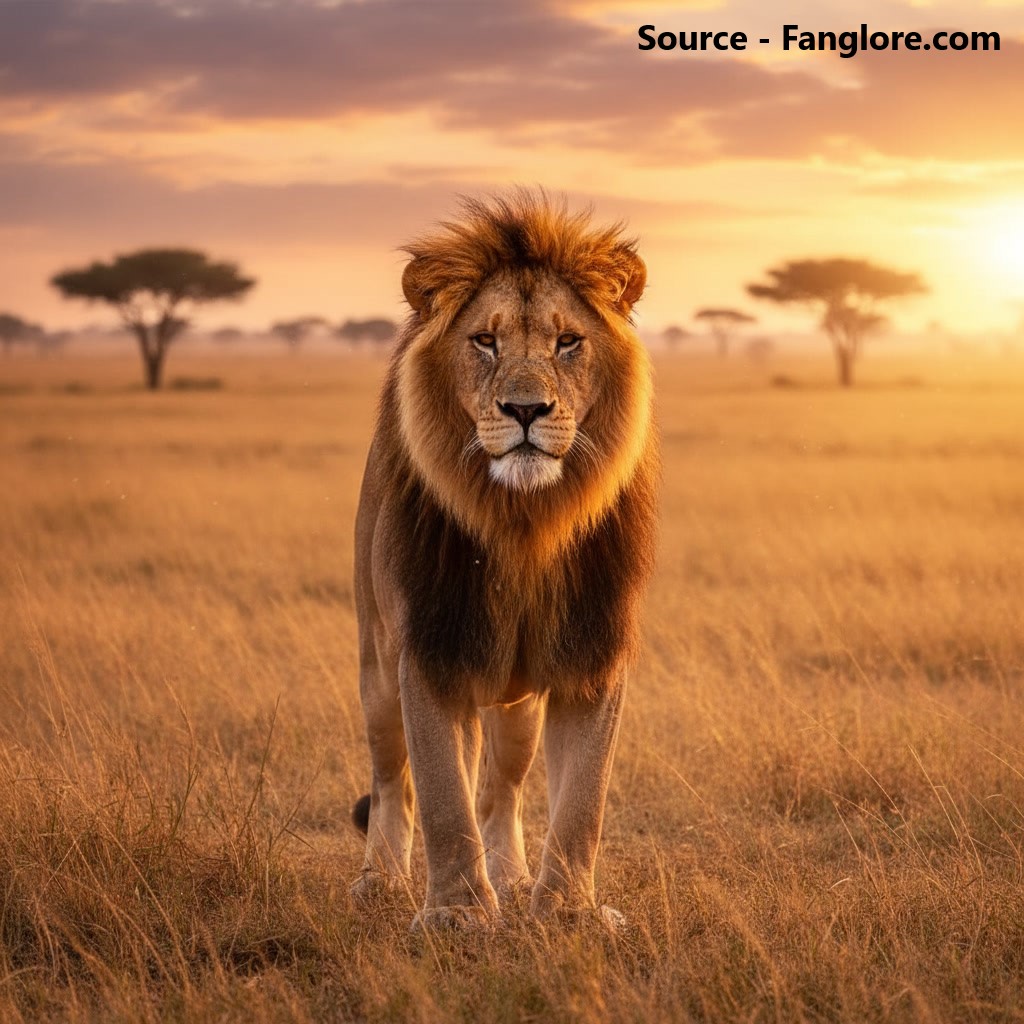
Most wild male lions get two to four years at the top before a younger, hungrier rival knocks them off their perch. Scarface got nearly a decade. By the time he died in 2021, he wasn’t just another male lion — he was arguably the most photographed, most documented, and most beloved lion on the planet. The Legendary Lion king of the Maasai Mara. This is his story.
Born Into a Legacy
Scarface came into the world around 2007 or 2008 in Kenya’s Maasai Mara National Reserve, the wildlife-packed savannah that borders Tanzania’s Serengeti and forms one of the richest ecosystems on Earth. He was a Maasai lion through and through — dark fur framing his face, a heavy black-tinged mane, and, even as a young male, a build that suggested he was going to be big. By adulthood he weighed close to 400 pounds
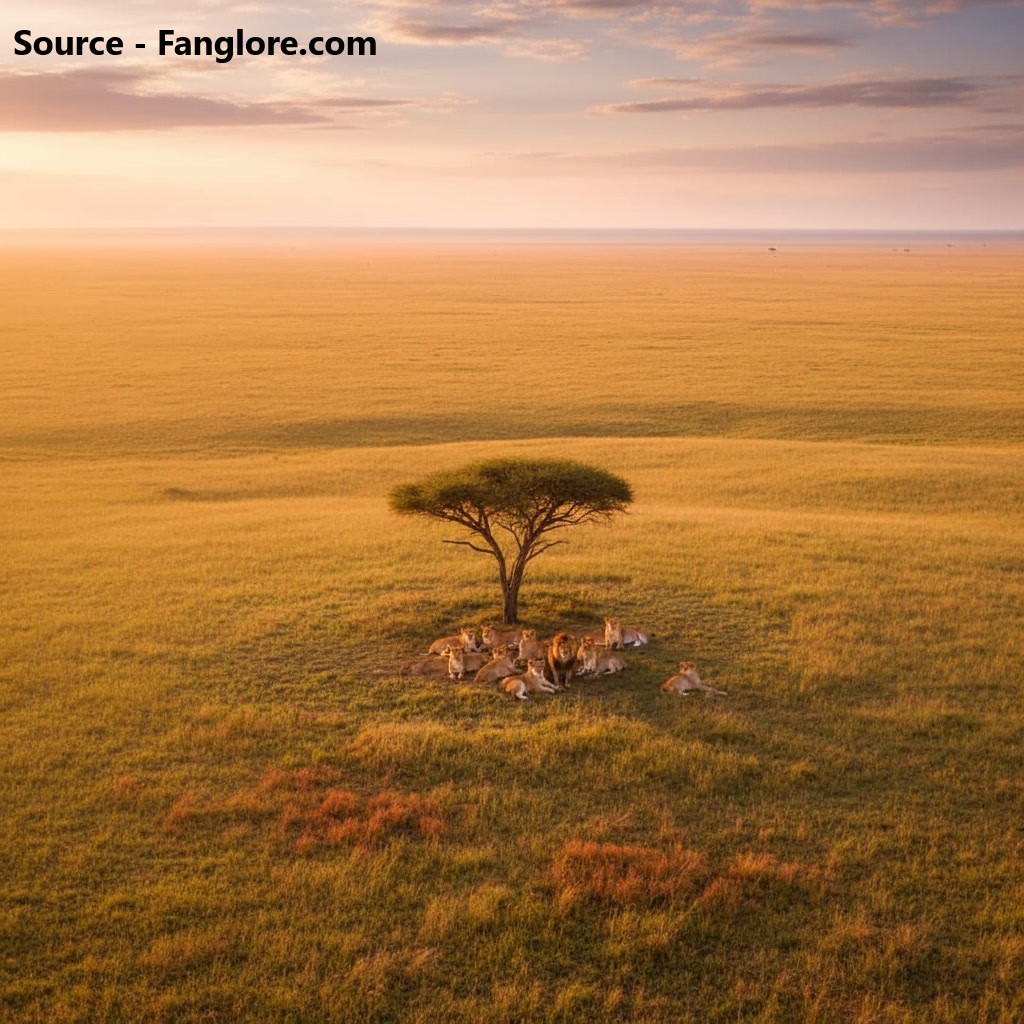
He wasn’t alone. Scarface grew up alongside three brothers — Hunter, Sikio, and Morani — and together the four of them formed a coalition that safari guides and documentary crews would eventually nickname “The Four Musketeers” or “The Marsh Pride Boys.” Male lion coalitions are a smart survival strategy in the wild: a lone male rarely holds territory for long, but a tight group of brothers fighting together can take on — and keep — a kingdom that would be impossible to defend alone. They were sure to leave a legacy behind.
The Fight That Gave Him His Name
In 2012, that coalition made its move. The four brothers launched a territorial takeover, fighting to win control of the Marsh Pride’s lionesses and driving off the resident males. They won. But the victory came at a cost — Scarface took an injury to his right eye that left behind a scar he’d carry for the rest of his life. The scar which make an icon of the lion and made him a legend.
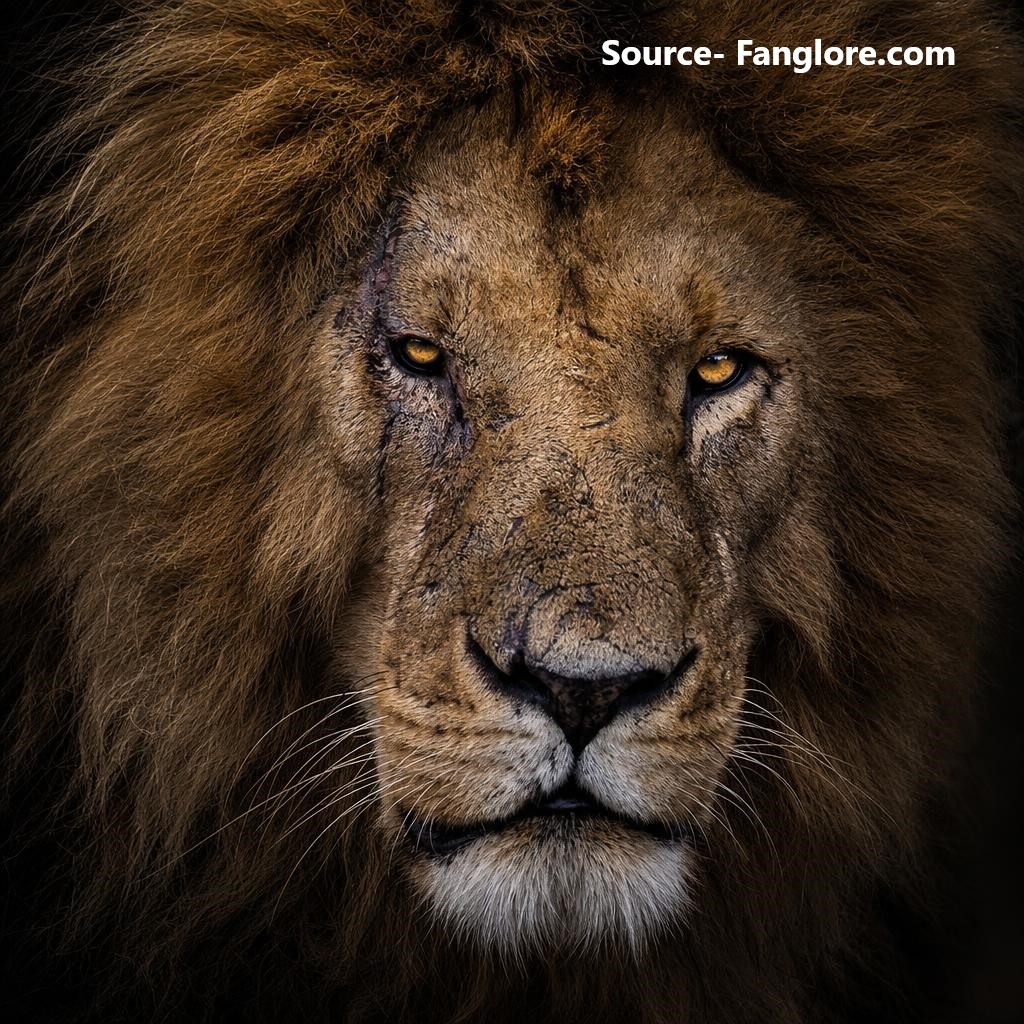
Exactly how he got it is still debated. Some say it happened in that 2012 battle for territory. Others trace it to a separate, even more dangerous encounter — a Maasai herder spearing him while defending livestock, an injury serious enough that reserve vets had to step in to treat him. Whatever the true origin, the scar became his signature. It’s the reason cameras loved him, the reason guides could pick him out of a crowd of lions in seconds, and the reason he needed no other introduction. Just “Scarface” — or simply “Scar” — was enough. He was a star of his world.
Ruling a 400-Square-Kilometer Kingdom
With the Marsh Pride secured, Scarface and his brothers held a territory that at times stretched across roughly 400 square kilometers along the Mara River — an enormous range by lion standards, sustained by the abundant game that the river corridor attracted. For years, the coalition defended that ground against rival prides, including a prolonged rivalry with the Paradise Pride. He was certainly a busy and ruthless king.
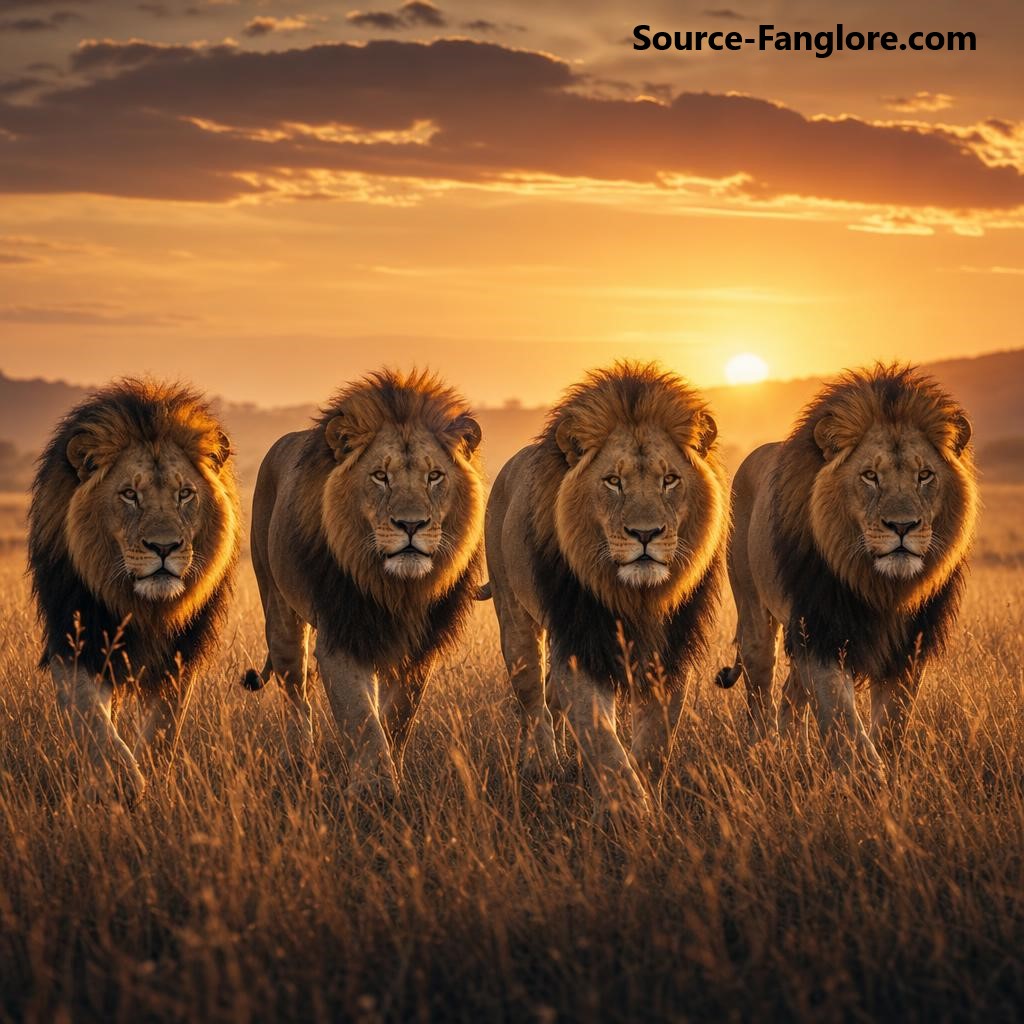
Stories about just how dominant Scarface and his brothers were have taken on a life of their own over the years — tales of dozens of rival lions defeated, and hundreds of hyenas killed circulate in his legend, though as with most oral wildlife folklore, the exact figures are impossible to verify and have almost certainly grown in the retelling. What isn’t in dispute is that the coalition held its ground for far longer than almost any other in the Mara’s recorded history, and that Scarface, specifically, became the face — quite literally — of that dominance.
The World’s Most Famous Lion
Scarface wasn’t just known to safari guides and locals. Through the 2010s, wildlife film crews turned their cameras on him again and again. He featured in the BBC’s Big Cat Diary, and later became one of the stars of the BBC’s Dynasties series. A Canadian documentary team produced Lions: In Search of Scarface, and independent filmmakers put out projects like Scarface: Rise of the Legendary Lion. National Geographic crews filmed him, too. As I mentioned earlier, he was a star, and his fame found no bounds.

That kind of exposure turned him into a genuine celebrity. Tourists specifically planned Kenya safaris hoping to spot him, waking before dawn for the best chance at catching him in good light. Among Mara regulars, there came to be an unofficial dividing line: those who’d seen Scarface, and those who hadn’t.
A Rare Kind of Ending
Most dominant male lions don’t get to choose how their reign ends. Eventually, a younger, stronger coalition arrives, and the old king is driven out, injured, or killed defending ground he can no longer hold. Scarface avoided that fate for an unusually long time — living to around 13 or 14 years old, at or beyond the outer edge of a wild lion’s typical lifespan. Which is very odd for any other lion.
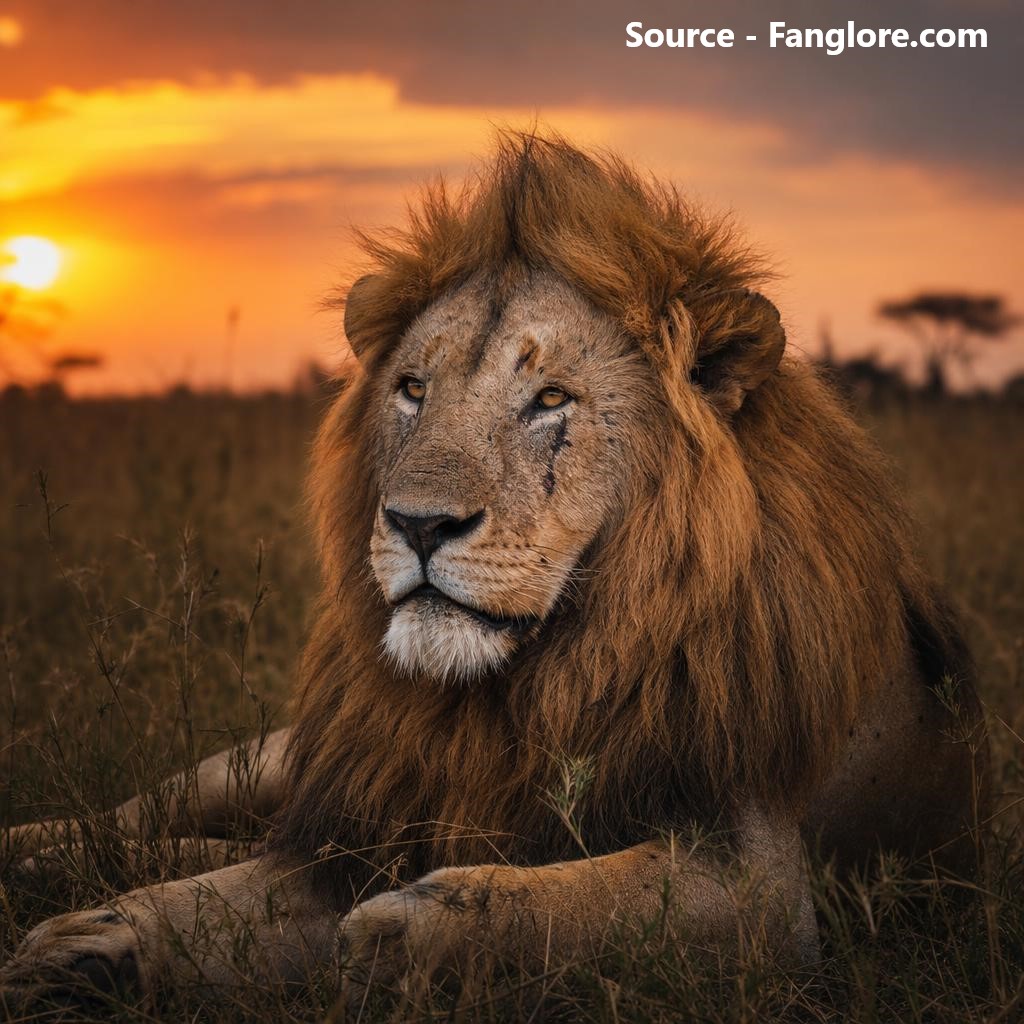
In his final days in June 2021, as age finally caught up with him, Scarface reportedly made his way back toward the territory near where he’d been born. Guides and photographers who tracked his last weeks described a lion who had grown thin and weak. According to several accounts from people in the Mara at the time, a group of young rival males came across him in those final days — and rather than attacking, simply left him be. Scarface died of natural causes on June 11, 2021, quietly and without incident, in the reserve that had been his home and his kingdom for his entire life. Honor to the end.
Why His Story Still Matters
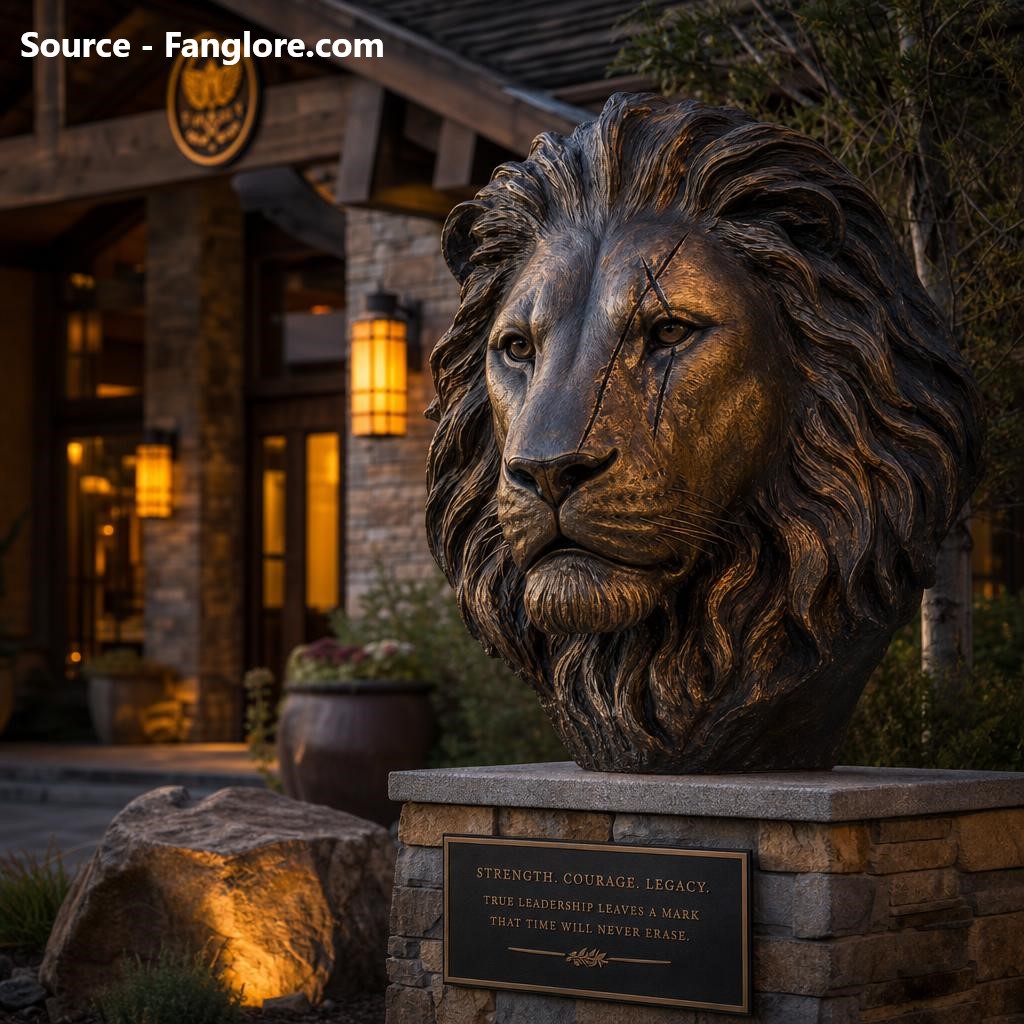
Scarface’s death made headlines across the wildlife world, and tribute pieces, memorial sculptures, and even a planted tree in his honor followed in the Mara. He’s remembered alongside other legendary African lions like Notch and Cecil — animals whose individual stories helped turn abstract conservation statistics into something people could actually connect with emotionally.
That, in the end, might be Scarface’s biggest legacy. Long after the specific number of hyenas or rivals in his legend fades into folklore, what remains is simpler: a scarred, battle-worn lion who held his ground for a decade, was loved by millions of people who never once got close enough to touch him, and went out on his own terms in the grass where he was born. An lion who showed the world what it means to be a Lion “The King of the Jungle”.
It isn’t new when something or some people come into this world, and aside from just going with the flow They just shift the entire ecosystem to their way of working. Animals are no exception to this thought, and animals like Scarface “The Lion”, Machli “The Tigress”, and Nzou “The Elephant” are the prime examples of this. They didn’t just live, they had a lifestyle that made people remember them.

Leave a Reply