
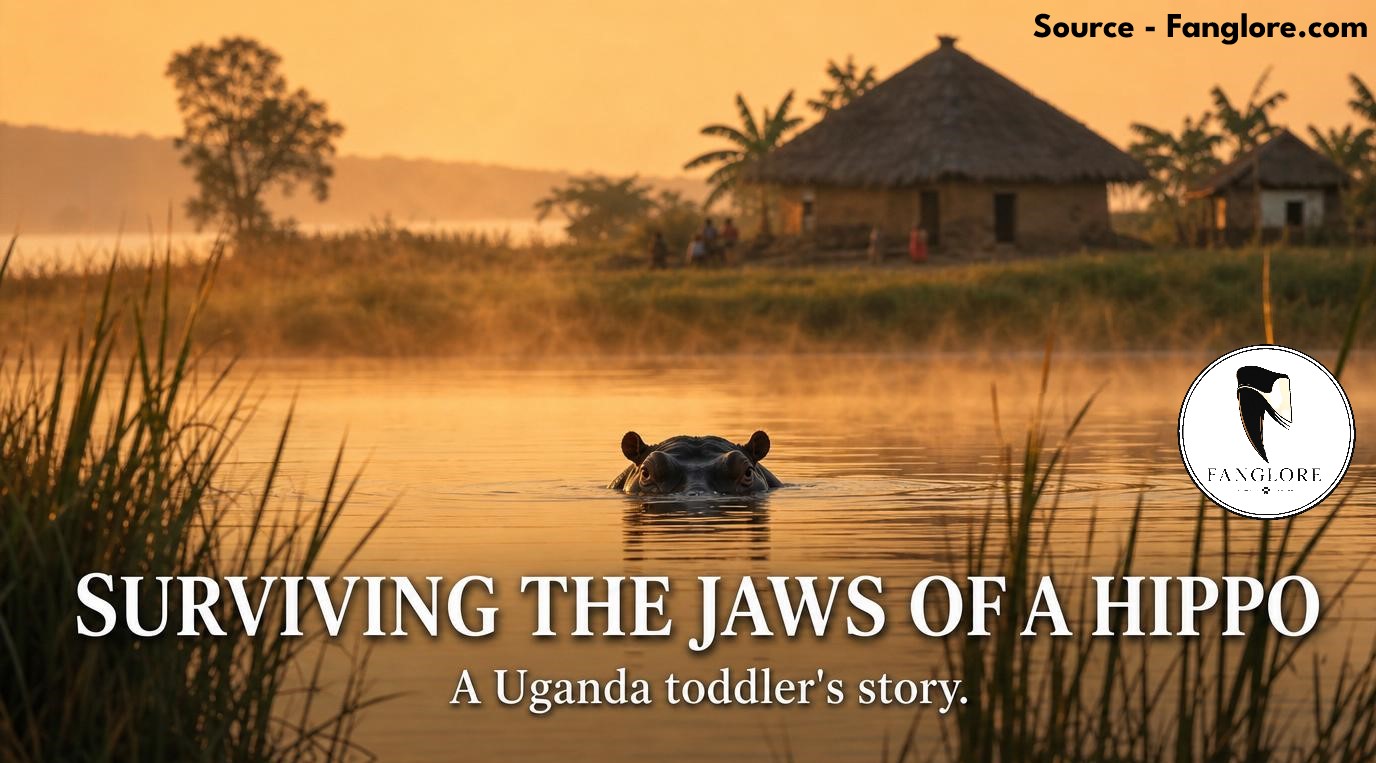
On a quiet Sunday afternoon in Uganda’s Kasese District, two-year-old Iga Paul was doing what toddlers do — playing just outside his family’s home. It should have been an unremarkable day. Instead, it became one of the rarest survival stories to come out of Africa’s wildlife regions in years.
You need more than just luck to survive an encounter like that, maybe the presence of God himself.
The Attack
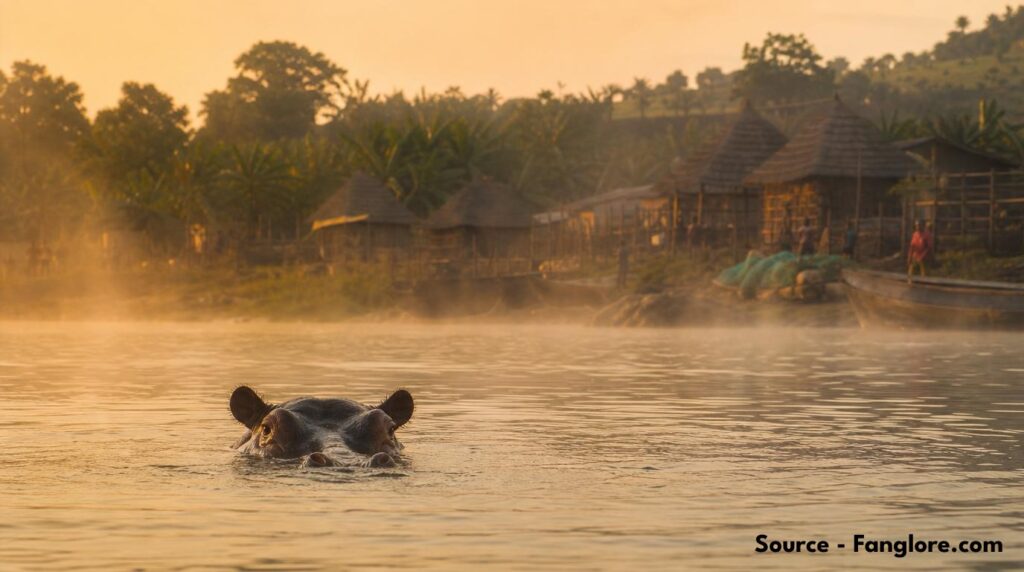
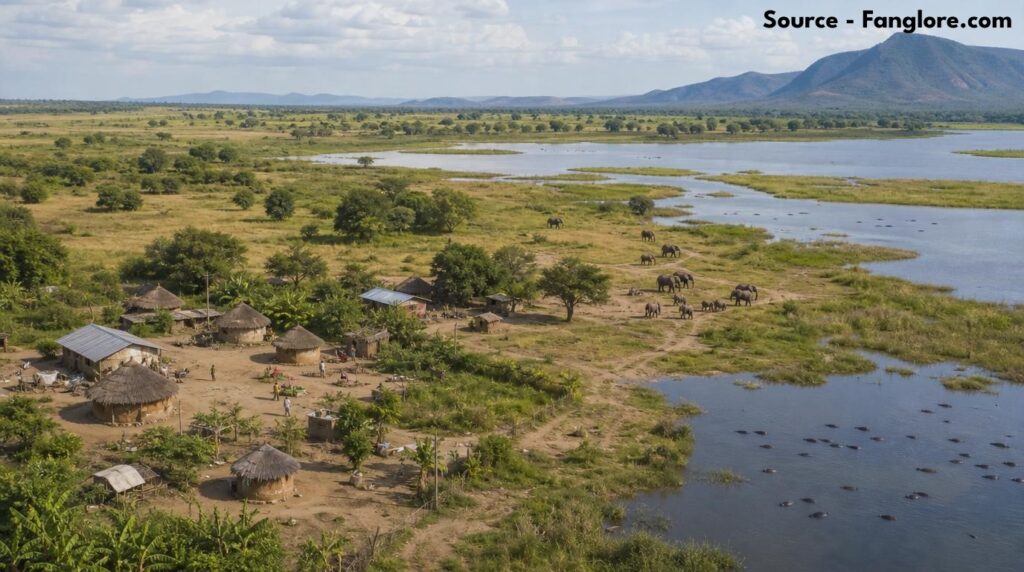
The boy’s home sat barely 800 metres from Lake Edward, one of the smaller lakes of the Great Rift Valley and home to an estimated 6,000 hippos. On December 4, 2022, around 3 p.m., a hippo left the water and grabbed Paul — closing its jaws over his head and upper body.
A nearby resident, Chrispas Bagonza, saw what was happening and ran toward the animal, hurling stones at it. Startled, the hippo released the boy and retreated back into the lake. Uganda Police Force called it the first known case of a hippo straying from Lake Edward, specifically to attack a child.
Some still contemplate it as a coincidence rather than an attack, since Hippos do not actively attack humans.
Paul was rushed to a local clinic for hand injuries, then transferred to Bwera Hospital for further care. He received a rabies vaccination as a precaution and made a full recovery before being returned to his parents.
Why This Almost Never Happens
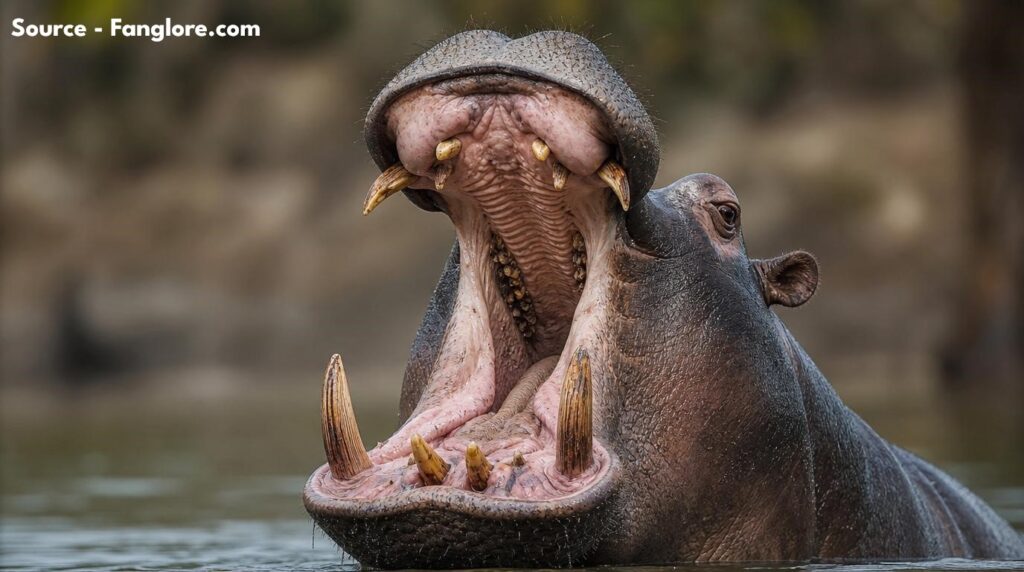
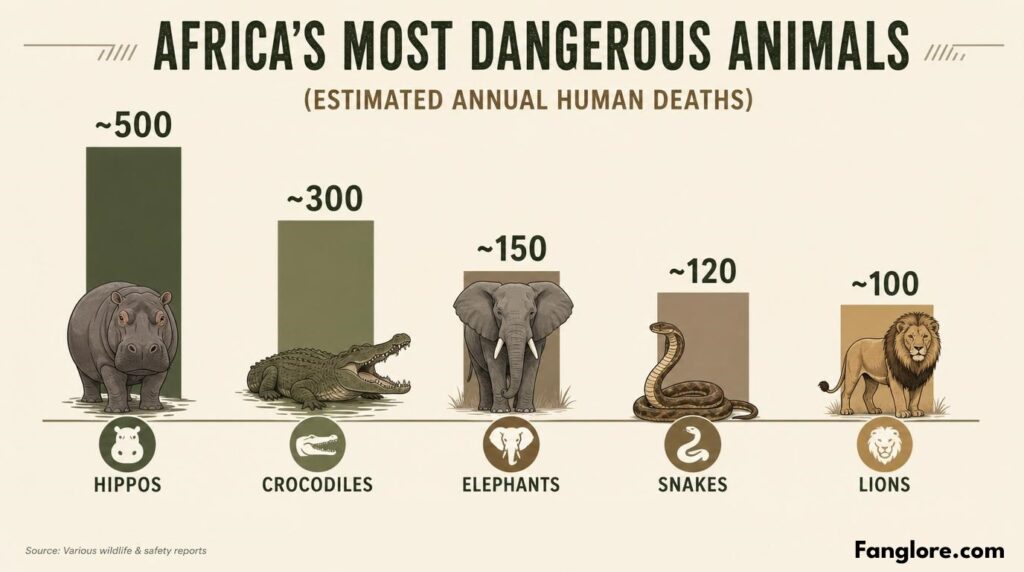
Hippos have a fearsome reputation — often cited as Africa’s deadliest large mammal, linked to roughly 500 human deaths a year on the continent. But nearly all of those incidents happen in the water: boats capsizing, fishermen straying too close to a pod, or people caught between a hippo and its escape route back to the lake.
An attack on land, on a child, near a home rather than a shoreline, is genuinely unusual. It’s a reminder that hippo behavior isn’t just about aggression — it’s about territory and water access. When a lake’s hippo population grows dense (Lake Edward’s estimated 6,000 is enormous for its size), individual animals sometimes push further inland than expected.
Many of you might wonder why the authorities didn’t move the hippos(to reserves, sanctuaries etc.) to curb their numbers? But moving out an animal as heavy and fierce as a hippo is quite expensive and risky, and the problem wouldn’t have been solved even if 100 or 200 hippos were moved out.
Living on the Edge of the Wild
Paul’s home lies inside Queen Elizabeth National Park, one of Uganda’s most visited wildlife areas, shared by lions, elephants, hyenas — and thousands of hippos. For families living inside or beside a national park, wildlife isn’t scenery. It’s a daily variable.
Following the attack, Uganda Police urged residents near lakes and game reserves to stay alert and report any animal incursions early — a small but telling sign of how human-wildlife coexistence in these regions is a constant, quiet negotiation.
History is filled with many records that human interference in animals’ habitats has caused problems for both of them.
The Bigger Picture, Years On
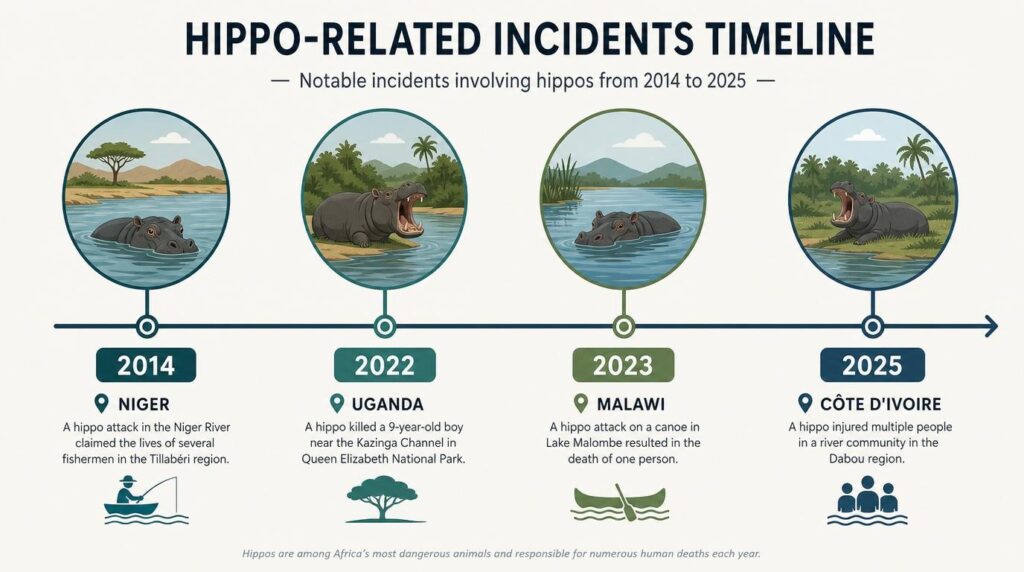
Since 2022, hippo-related incidents have continued to make headlines across the continent — a capsized boat in Malawi’s Shire River in 2023, another in Côte d’Ivoire in 2025 — almost always tied to water crossings rather than land encounters. Researchers have also pushed back on the oft-repeated “500 deaths a year” figure, noting that reliable, continent-wide data on hippo attacks is thin; some regional studies suggest crocodiles cause far more fatalities than hippos do.
What makes Iga Paul’s story stand out isn’t the danger — it’s the outcome. A two-year-old was, for a few terrifying seconds, inside the mouth of one of the world’s most powerful animals. And he walked away from it.
Luck or God’s Grace, you tell it!
Sources: Uganda Police Force statement, CNN, NPR, CBS News, Africanews, Washington Post, and follow-up wildlife-conflict reporting through 2025–2026.
Leave a Reply