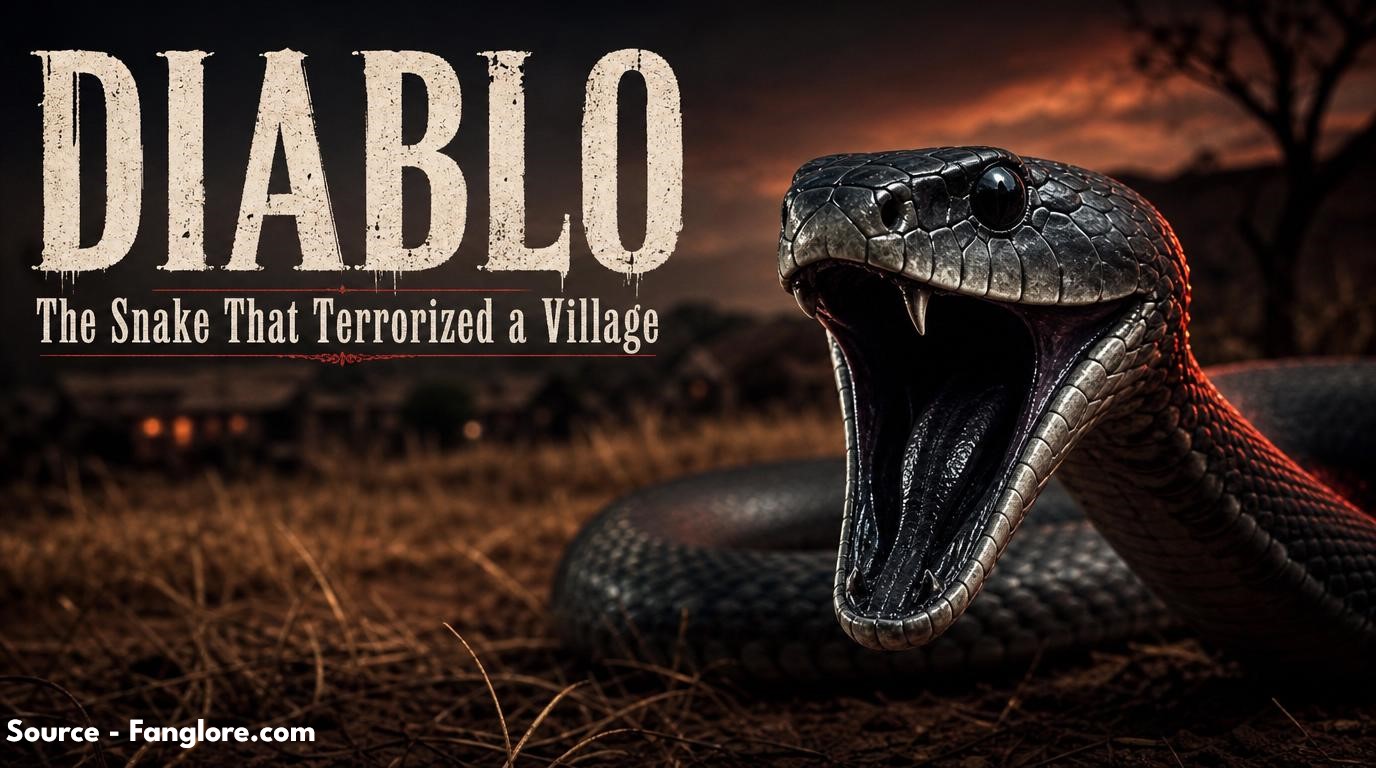
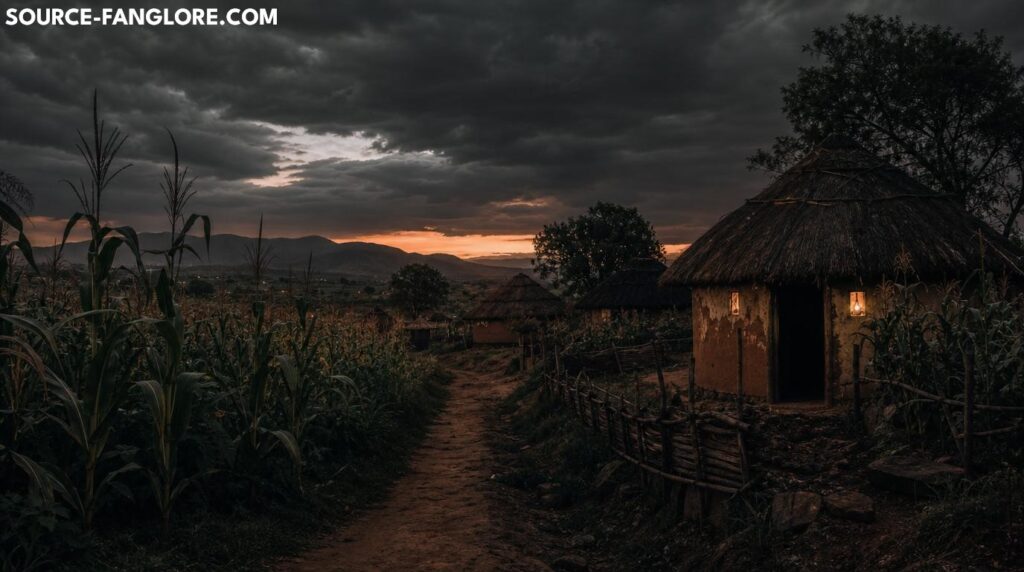
There are snakes, and then there are legends. In the dusty maize fields of a small South African village, one snake became both.
The villagers didn’t give it a scientific name. They didn’t need one. They called it Diablo — the devil — and for months, that name was enough to keep grown men off the footpaths after sundown.
This is the story of how a single black mamba, real, fast, and lethally venomous, grew into the closest thing to a monster that rural South Africa has ever produced. It’s a tale passed between neighbors more than it is a police report, and that’s exactly what makes it worth telling.
Black mambas are infamous for their aggressive behavior but this one was a notch ahead of its kin.
How the Legend of Diablo Began
As the story goes, it started the way most rural snake tales do — quietly. A chicken coop raided. A dog that wouldn’t stop barking at a hedge. A farmhand who swore he saw something long and black-mouthed vanish into a termite mound faster than his eyes could track it.
Then came the first real scare: a woman collecting firewood at the edge of the field said a snake reared up nearly a third of its body off the ground, hood-less but somehow more terrifying than a cobra, and held its ground instead of fleeing. She ran. It didn’t chase her. But the story that spread by nightfall did more than run — it sprinted through every household in the village.
What makes this incident more terrifying is the fact that an average black mamba can easilt catch a running human but this one didn’t budged. Why?
Within a week, “Diablo” had a name, a reputation, and a body count that grew larger with every retelling — as legends about the world’s most feared snake tend to do.
Why a Black Mamba Makes the Perfect Villain
Fear needs a face, and few animals on Earth wear one as convincingly as the black mamba (Dendroaspis polylepis).
- It’s fast. Black mambas can move at speeds up to 12.5 mph over short bursts — quick enough that “it came out of nowhere” isn’t an exaggeration, it’s biology.
- It’s long. Africa’s longest venomous snake, capable of reaching up to 14 feet, though most adults average closer to 8 feet.
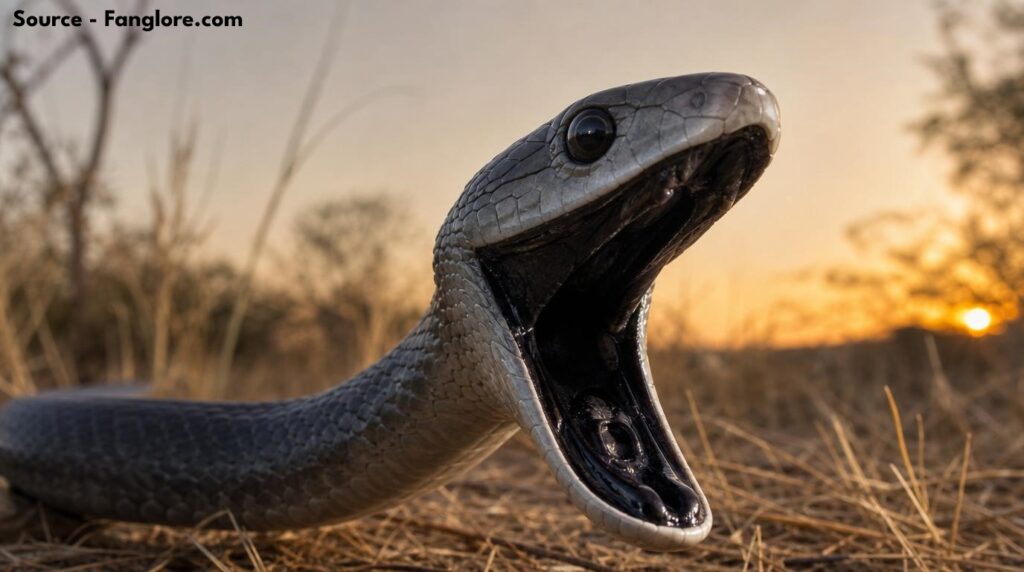
- It’s not black at all. The name comes from the ink-black interior of its mouth, flashed wide open as a final warning before it strikes — a visual so unsettling that early European explorers assumed the entire animal was black.
- Its venom is a death sentence without treatment. A neurotoxic bite can bring on paralysis within hours, and historically, an untreated bite was close to 100% fatal.
Put that combination in one animal, drop it into a village with no easy access to antivenom, and you don’t need to invent a monster. Nature already built one.
Black Mamba is the most feared snake in South Africa due to all these reasons.
The Nights No One Walked Alone
By the second month, Diablo wasn’t just a snake anymore — it was a curfew.
Villagers stopped taking the shortcut through the field after dark. Mothers kept children within shouting distance of the house. A local snake catcher was called in twice and came back empty-handed both times, which only fed the story further: if an expert couldn’t find it, maybe it really wasn’t just a snake.
This is the part of the legend that snake biologists will recognize instantly. Black mambas are notoriously shy and will almost always retreat rather than confront a human — but they are also territorial, and if genuinely cornered near a den site (a termite mound, a woodpile, a stack of loose rock), a mamba can strike repeatedly and with devastating speed. A village built its terror around exactly that behavior, without ever needing the snake to be anything more than what it already was.
But as everything is destined to come to an end, this story also came to it’s conclusion very fast.
How the Story Ended
Every village legend needs an ending, and Diablo’s came the way most real mamba encounters do: anticlimactically.
A team eventually tracked a large mamba to a woodpile near the field’s edge — matching the size and behavior locals had described for months — and relocated it well away from the settlement. No showdown. No final battle. Just a snake doing what a displaced predator does when its territory is disturbed by encroaching farmland, and a village finally exhaling.
The devil, it turned out, had just been looking for rats and shelter the whole time.
There were no incidents after that relocation.
The Real Villain Isn’t the Snake
Strip away the nickname and the legend, and what’s left is a pattern seen across rural Africa: as farmland and settlements push further into savanna and woodland, black mamba encounters with humans are becoming more common — not because the snakes are more aggressive, but because there’s simply less room left for either side to avoid the other.
Diablo wasn’t hunting the village. The village had, slowly, moved into Diablo’s.
That doesn’t make the fear irrational — a real black mamba bite is still a genuine medical emergency, and treating one with the respect the legend demands isn’t paranoia, it’s common sense. But it does explain why these stories keep repeating themselves across the continent, one village and one nickname at a time. There are plenty of stories like this on our blog itself.
If human-snake conflict born from shrinking wild spaces feels familiar, it plays out on an even larger scale on another snake-dominated corner of the world — Snake Island, where thousands of pit vipers rule an island humans are legally barred from setting foot on.
FAQs About Black Mambas and Village Encounters
Is the story of “Diablo” a documented, verified incident?
No — it’s presented here as a village legend, in the tradition of African oral storytelling around dangerous wildlife. The snake behavior, biology, and venom facts described are accurate to the species; the narrative itself is a dramatized composite, not a cited news event.
Are black mambas really as dangerous as their reputation suggests?
Yes, in terms of venom potency and speed. No, in terms of temperament — black mambas are shy and prefer to flee. Most bites happen when the snake is cornered or surprised at close range.
What should you do if you encounter a black mamba?
Stay still, back away slowly, and never attempt to handle or corner it. If bitten, seek emergency medical care immediately — antivenom is time-critical.
Why are black mamba encounters increasing in some African villages?
Habitat loss and agricultural expansion are pushing mambas and other snakes into closer contact with human settlements, increasing the odds of an encounter.
Leave a Reply